
Manila Panel Cost: 3 Tips
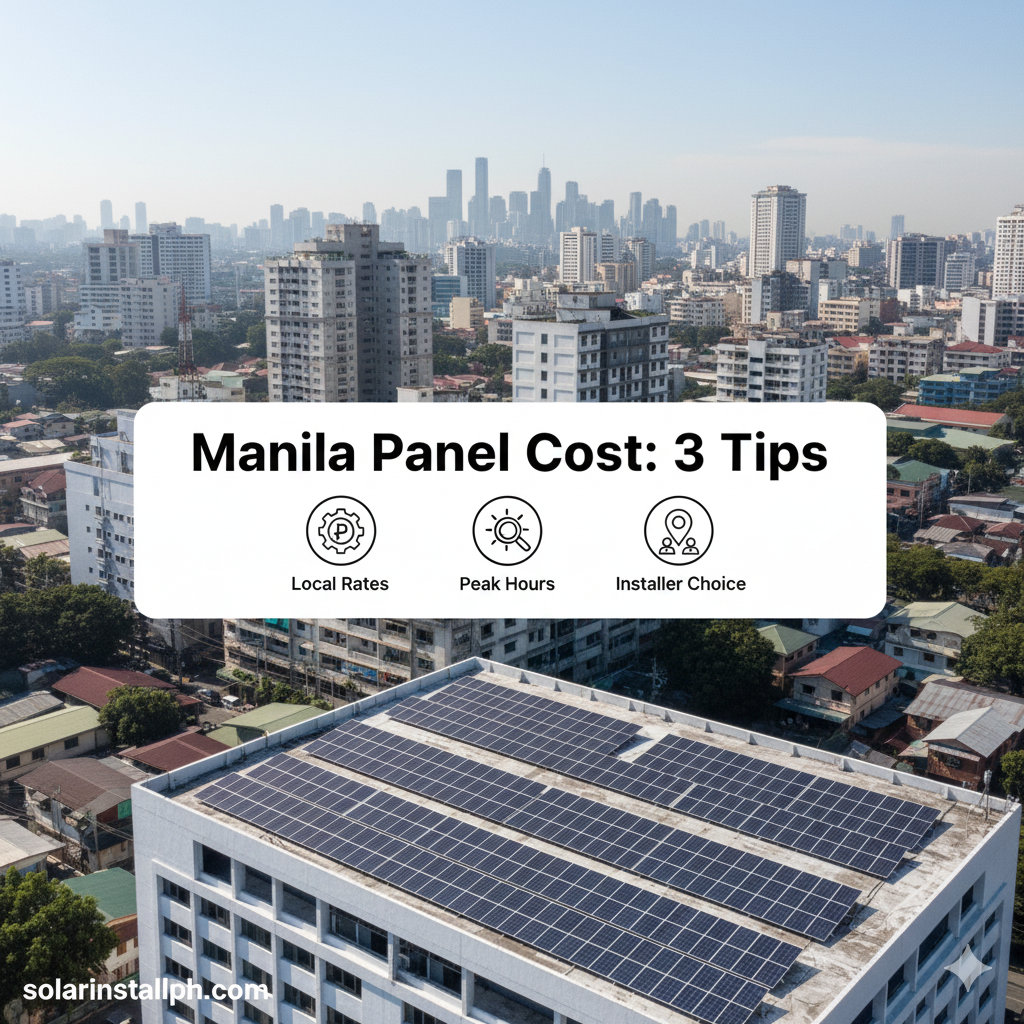
For residents of Metro Manila, the monthly arrival of the Meralco bill is a constant reminder of the high cost of urban living. The relentless hum of air conditioners battling the city heat, the bright lights of a bustling household, and the power needed for a dozen modern appliances all add up to some of the highest electricity rates in the country. It's a financial reality that has pushed thousands of Manila homeowners to look skyward for a solution: solar power.
The prospect of slashing a ₱15,000 electric bill by half or more is a powerful motivator. Yet, the path to energy independence in the capital region is paved with unique challenges and considerations. The upfront cost of a solar panel system is a significant investment, and navigating this in a dense, fast-paced urban environment requires a specific strategy. It’s not just about finding the cheapest panels; it’s about making a smart, long-term investment that is perfectly tailored to the realities of Manila life.
This guide provides three essential tips for any Manila resident considering a solar panel installation. From right-sizing your system for maximum ROI to mastering the local bureaucracy, these insights will help you manage costs, avoid common pitfalls, and secure the best possible value for your solar journey.
1. Get Laser-Focused on Right-Sizing and ROI for the Manila Context
In the sprawling, diverse housing landscape of Metro Manila—from large single-detached homes in Quezon City to modern townhouses in Taguig—there is no "one-size-fits-all" solar solution. The most critical factor in controlling your cost and maximizing your return is to install a system that is precisely tailored to your household’s actual energy consumption.
Start with Your Meralco Bill: Your most powerful tool is your past electricity usage. Gather your Meralco bills for the last 12 months and find your average monthly kilowatt-hour (kWh) consumption. This data is the bedrock of a successful solar plan. It tells a potential installer exactly how much power you use and when you use it. For a Manila household with a monthly bill of around ₱12,000 to ₱15,000, a medium-sized system of around 3 to 5 kilowatts-peak (kWp) is often the sweet spot. Such a system could cost between ₱180,000 and ₱300,000.
Think Daytime, Think ROI: The primary financial benefit of a grid-tied solar system—the most common type in Manila—is offsetting your expensive daytime electricity consumption. Focus on a system size that will cover the bulk of your power needs while the sun is shining. This includes refrigerators, work-from-home setups, and, most importantly, your air conditioners. A system that generates more power than you can consume or export under the net metering cap is an inefficient use of your investment.
Calculate Your Urban Payback Period: The payback period for a solar investment in Manila is impressively fast, often ranging from 4 to 7 years. To calculate a rough estimate:
Estimate Annual Savings: Multiply the annual kWh production of your proposed system (your installer will provide this) by your current Meralco rate (e.g., ~₱11/kWh).
Divide Cost by Savings: Divide the total system cost by your annual savings.
Example: A ₱270,000 system that saves you ₱60,000 per year has a payback period of 4.5 years.
After this payback period, the energy your system produces is essentially free for the remaining 20+ years of its life. To get a truly accurate picture, a solar ROI guide can help you factor in details like panel degradation and potential electricity rate hikes, making your budget even more robust.
2. Master the Meralco Net Metering Process with a Pro
Installing solar panels on your Manila roof is only half the battle. To unlock their full financial potential, you must connect your system to the grid and enroll in the Meralco Net Metering program. This allows you to export any excess solar power you generate back to the grid for credits, effectively spinning your electric meter backward.
However, the application process is notoriously complex and can be a major source of delays and frustration if not handled correctly. A recent study from Ateneo de Manila University highlighted these bureaucratic hurdles as a significant barrier to solar adoption in the metro. This is where choosing an experienced, professional installer becomes a critical cost-management strategy.
The Paperwork Labyrinth: A legitimate solar installation requires a mountain of paperwork. Your installer acts as your chief navigator through this process, which includes:
Securing Electrical and Building Permits from your specific city's LGU (e.g., Makati City Hall, Pasig City Hall).
Submitting a detailed technical application to Meralco, including plant parameters and a signed electrical plan from a Professional Electrical Engineer (PEE).
Coordinating a Distribution Impact Study (DIS) if required.
Obtaining a Certificate of Final Electrical Inspection (CFEI) from your LGU.
Signing and notarizing the final Net Metering Agreement with Meralco.
Why a Pro Installer Saves You Money: Attempting to navigate this process yourself is impractical and risky. A seasoned Manila-based solar company has established relationships and a deep understanding of the specific procedures and personnel at both Meralco and the various LGUs. Their service fee for handling this process, which is included in your total project cost, saves you weeks, if not months, of personal time, stress, and potential mistakes that could lead to costly re-submissions or even penalties.
The timeline from application to the final installation of the bidirectional meter can take anywhere from a few weeks to several months. An installer with a dedicated processing team is your best asset in expediting this. By following a clear Meralco Net Metering guide, you can understand the steps involved, but entrusting the execution to an expert is the smartest financial move.
3. Invest in Quality and Durability for the Urban Environment
In the dense, often polluted, and typhoon-prone environment of Metro Manila, the quality of your solar equipment and the expertise of your installation team are not areas where you should cut corners. Opting for the absolute cheapest quote can lead to significant long-term costs that will quickly erase any initial savings.
Built for Typhoons: Metro Manila is in the heart of the Philippines' typhoon belt. The mounting system that fastens your solar panels to your roof must be engineered to withstand winds of over 200 kph. A budget installer might use lower-grade aluminum or inferior fasteners that can corrode or fail, leading to catastrophic damage to your roof and property. Insist on high-quality, corrosion-resistant mounting hardware as a non-negotiable part of your investment. This is a core part of a safe and effective rooftop solar guide.
Combatting Urban Heat and Haze: The urban heat island effect means that Manila rooftops get exceptionally hot, which can reduce the efficiency of solar panels. Furthermore, city smog and dust can accumulate on panels, requiring more frequent cleaning to maintain optimal performance. This makes investing in high-quality, Tier 1 panels with better temperature coefficients and durable, easy-to-clean surfaces a wise decision. These premium panels might cost more upfront but will generate more power and degrade more slowly over their 25-year lifespan. Learning about the top solar brands of 2025 can help you identify panels known for their durability and performance.
The Value of Workmanship Warranty: A cheap installation often comes with a flimsy or non-existent workmanship warranty. A reputable installer will stand behind their work with a warranty of 5 to 10 years covering any issues related to the installation itself, such as leaks or wiring problems. This guarantee is a crucial part of your long-term financial security. Before signing any contract, make sure you choose a solar company that has a strong local presence, a proven track record in Manila, and a clear commitment to after-sales service.
By focusing on a precisely sized system, partnering with an expert to manage the bureaucracy, and investing in durable, high-quality components, you can navigate the complexities of going solar in Manila and secure a powerful financial asset for your home.