
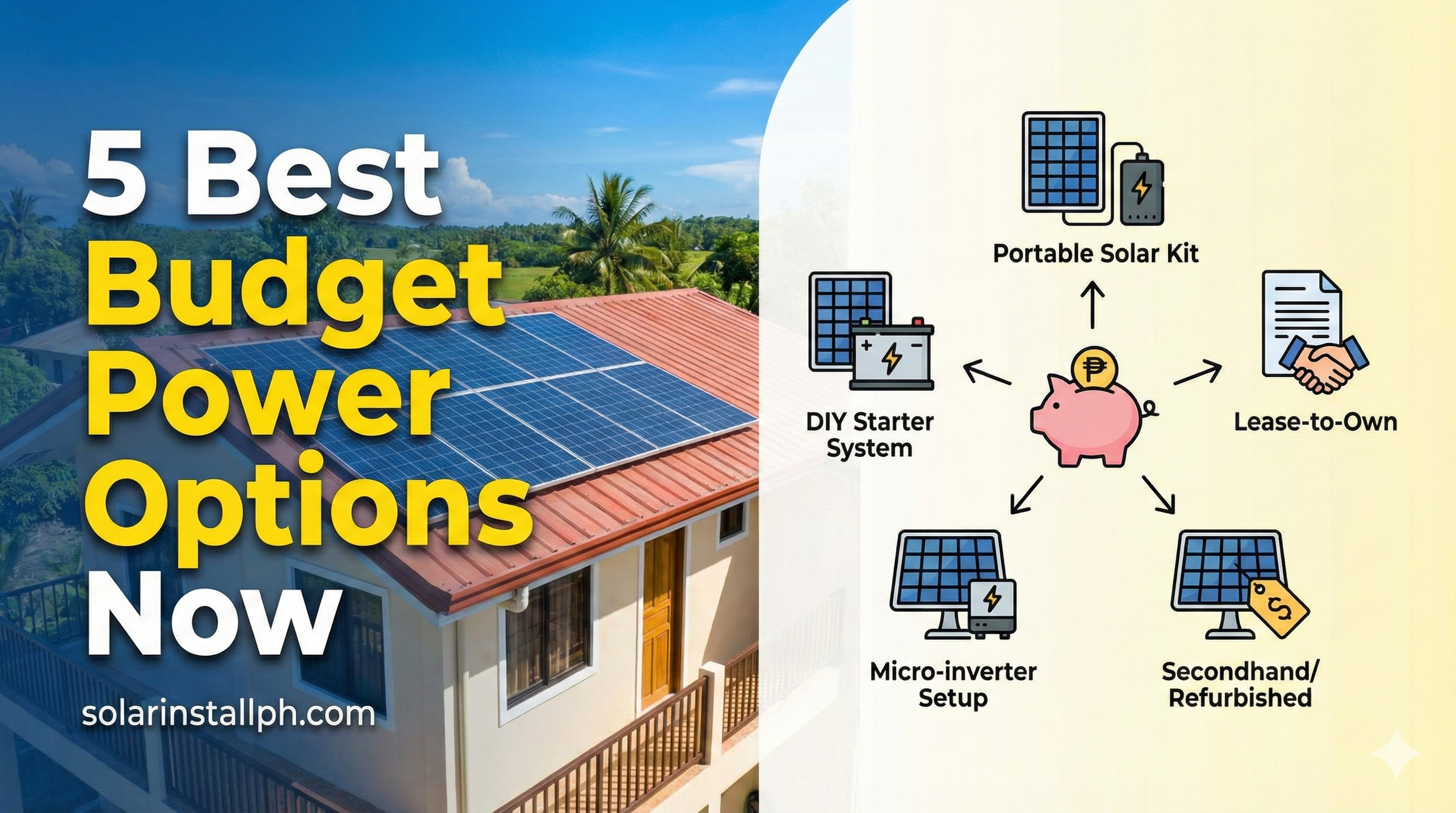
5 Best Budget Solar Power Options for the Philippines
5 Best Budget Solar Power Options for the Philippines in 2024
As electricity rates continue to rise in the Philippines—with Meralco announcing a rate increase to ₱11.93 per kWh in October 2023, the highest in over a decade—more Filipino households are seeking affordable solar power solutions to reduce their monthly expenses. This comprehensive guide explores the best budget solar power options available for Filipino consumers, from solar-powered fans to complete DIY kits, helping you make an informed decision based on your energy needs and budget constraints.
Understanding Solar Power Basics
Before diving into specific products, let's clarify key terms that every Filipino consumer should know:
- Solar Panel: A device that converts sunlight into electricity using photovoltaic (PV) cells.
- Net Metering: A billing system that allows solar panel owners to sell excess electricity back to the grid, as implemented under the Department of Energy's net metering program.
- Wattage (W): The measure of power output or consumption; a 50W solar panel produces 50 watts under ideal conditions.
- Kilowatt-hour (kWh): A unit of energy; 1 kWh equals 1,000 watts used for one hour.
- Inverter: A device that converts DC (direct current) electricity from solar panels into AC (alternating current) used by household appliances.
The Current State of Solar Energy in the Philippines
The Philippines has made significant strides in renewable energy adoption. According to the Department of Energy, renewable energy accounted for 30% of the country's total power generation capacity as of 2023, with solar growing by 42% year-over-year. Additionally, the Bangsamoro Autonomous Region in Muslim Mindanao (BARMM) has launched initiatives to bring solar power to off-grid communities, demonstrating the government's commitment to expanding solar accessibility nationwide.
"Budget solar solutions are no longer just for environmentalists—they're practical investments that pay for themselves within 2-5 years, especially given current electricity prices."
5 Best Budget Solar Power Options for Filipino Households
1. Solar Electric Fans
How It Works: Solar electric fans are standalone cooling devices equipped with small solar panels (typically 10-20W) that power a DC motor. During the day, the solar panel directly powers the fan while also charging an integrated battery for evening use.
Price Range: ₱1,500 – ₱5,000
Pros:
- Immediate relief from Philippine heat
- Zero electricity cost after purchase
- Portable and easy to install
- No complicated wiring required
- Can reduce air conditioning usage by up to 30%
Cons:
- Limited cooling capacity for large rooms
- Depends on direct sunlight availability
- Battery degradation over time (typically 2-3 years)
Best For: Students, renters, and individuals looking for supplemental cooling in bedrooms or home offices.
2. Portable Power Stations with Solar Capability
How It Works: Portable power stations are large battery packs (typically 200Wh-1000Wh capacity) that store electricity for later use. They can be charged via wall outlets, car chargers, or portable solar panels (sold separately).
Price Range: ₱8,000 – ₱35,000 (unit only); ₱3,000 – ₱15,000 (compatible solar panels)
Pros:
- Versatile power source for multiple devices
- Can power TVs, laptops, WiFi routers, and phone chargers
- Provides backup during power outages (critical during typhoon season)
- Portable for camping or outdoor activities
- Long battery lifespan (typically 500+ charge cycles)
Cons:
- Higher upfront investment required
- Solar panels sold separately increase total cost
- Limited power output for high-energy appliances like refrigerators
Best For: Remote workers, small business owners, and families seeking emergency backup power.
3. Micro-Inverter Grid-Tie Systems
How It Works: These compact solar systems connect directly to your home's electrical panel through a micro-inverter, which converts DC power from solar panels to AC power for immediate household use. Excess electricity can flow back to the grid under the DOE's net metering program, earning credits on your electricity bill.
Price Range: ₱25,000 – ₱80,000 (1-3 panel systems, 300W-900W capacity)
Pros:
- Potential to significantly reduce monthly Meralco bills
- Eligible for net metering credits
- Scalable—you can add more panels later
- Professional installation often included
- Modern systems offer smartphone monitoring
Cons:
- Requires suitable roof space and sun exposure
- May need permit approval from local utilities
- Longer payback period (3-5 years)
Best For: Homeowners with suitable rooftops seeking to lower their electricity bills long-term.
Expert Insight: According to Solar Philippines, a leading local installer, "Micro-inverter systems offer the best balance of affordability and functionality for budget-conscious homeowners. They're also eligible for bank financing through BPI and BDO green loan programs."
4. Solar Lighting Kits
How It Works: Solar lighting kits include small photovoltaic panels, LED bulbs, and often a battery system. The panels charge during the day, storing energy in batteries that power lights at night.
Price Range: ₱500 – ₱4,000 (basic kits); ₱5,000 – ₱15,000 (complete indoor kits with multiple lights)
Pros:
- Lowest barrier to entry for solar adoption
- Dramatically reduces lighting electricity costs
- Easy DIY installation
- Ideal for off-grid areas and rural electrification
- LED technology provides bright, efficient lighting
Cons:
- Provides limited functionality beyond lighting
- Battery performance decreases in areas with limited sunlight
- May not be sufficient as sole light source for larger homes
Best For: Budget-conscious consumers wanting to start small, renters, and households looking to supplement traditional lighting. Excellent for sari-sari stores that operate in the evenings.
5. DIY Solar Starter Kits
How It Works: DIY solar kits come with all necessary components—solar panels, charge controller, mounting hardware, wiring, and sometimes batteries or an inverter. These kits are designed for homeowners who prefer to handle installation themselves, saving on labor costs while learning about their system.
Price Range: ₱15,000 – ₱45,000 (complete starter kits, 100W-400W)
Pros:
- Complete package with everything needed to start
- Significant cost savings vs. professionally installed systems
- Educational—learn how solar systems work
- Flexible configuration options
- Can be expanded with additional components
Cons:
- Requires basic electrical knowledge for safe installation
- No professional support if problems arise
- May void warranties if improperly installed
- Time investment for research and installation
Best For: Hands-on homeowners comfortable with DIY projects, tech enthusiasts, and those who enjoy learning new skills.
Comparison Table: Budget Solar Options at a Glance
| Option | Price Range (PHP) | Installation | Payback Period | Monthly Savings Potential |
|---|---|---|---|---|
| Solar Electric Fans | ₱1,500 - ₱5,000 | DIY (5 minutes) | 6-12 months | ₱200 - ₱500 |
| Portable Power Stations | ₱11,000 - ₱50,000 | None required | 1-3 years | ₱300 - ₱800 |
| Micro-Inverter Grid-Tie | ₱25,000 - ₱80,000 | Professional | 3-5 years | ₱1,000 - ₱4,000 |
| Solar Lighting Kits | ₱500 - ₱15,000 | DIY (30-60 mins) | 4-8 months | ₱150 - ₱400 |
| DIY Solar Kits | ₱15,000 - ₱45,000 | DIY (2-4 hours) | 2-4 years | ₱500 - ₱1,500 |
Frequently Asked Questions About Budget Solar Power in the Philippines
How much can I really save with budget solar power in the Philippines?
Savings vary based on your chosen system and usage patterns. A basic solar electric fan can save ₱200-₱500 monthly on your electricity bill, while a micro-inverter grid-tie system can reduce Meralco bills by ₱1,000-₱4,000 monthly depending on your consumption and system size.
Are cheap solar products from online marketplaces reliable?
Caution is advised when purchasing from unverified sellers. Look for products with Philippine Electrical Code (PEC) compliance, proper warranties (at least 1 year), and certified specifications.
Do solar panels work during cloudy weather or rainy season?
Yes, solar panels still generate electricity on cloudy days, though at reduced efficiency (typically 10-25% of optimal output). The Philippines experiences monsoons mainly from June to November, but the country still receives significant sunlight.
Can I install solar panels myself, or do I need a professional?
Simple systems like solar fans, lighting kits, and portable power stations are designed for DIY installation with no electrical expertise needed. However, grid-tie systems connected to your home's electrical panel should be installed by a licensed electrician or certified solar installer.
What government incentives are available for solar adoption in the Philippines?
The government offers several incentives including: (1) Zero VAT on solar panels and components under the CREATE Act, (2) Net metering programs allowing you to sell excess power back to the grid, (3) Green financing options from government banks like DBP and Landbank, and (4) Local government unit (LGU) incentives that vary by municipality.
Making the Right Choice for Your Home
Choosing the best budget solar power option for the Philippines depends on your specific circumstances—your monthly electricity consumption, available space, whether you own or rent your home, and your comfort level with technology and installation.
For those just starting their solar journey, we recommend beginning with a solar lighting kit or electric fan to experience the benefits firsthand with minimal investment.
Remember that even small steps toward solar adoption make a difference—not only for your wallet but also for the environment. With the Philippines targeting 35% renewable energy in its power mix by 2030, Filipino households embracing solar are contributing to a cleaner, more sustainable future.