
What Off-Grid Power Suits Your Home?
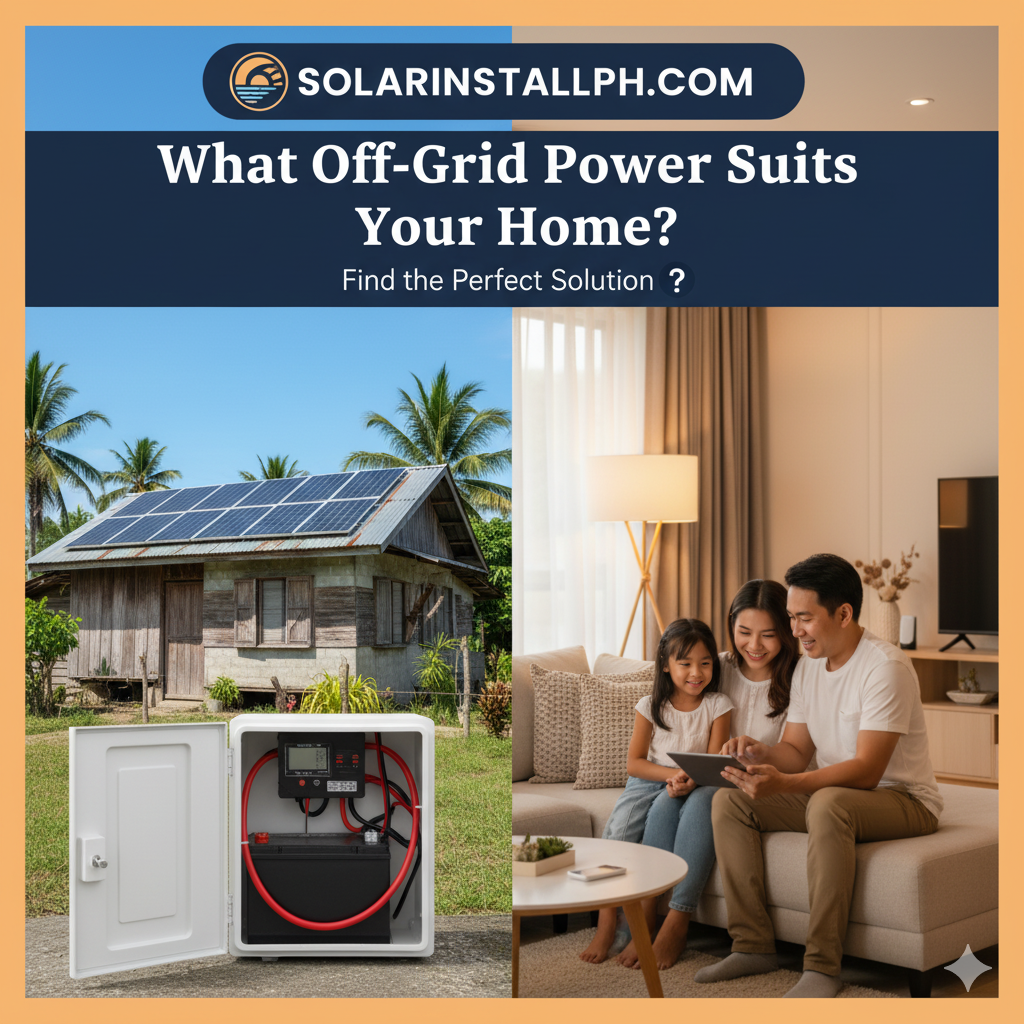
In the Philippines, a country blessed with abundant sunshine but burdened by high electricity costs and frequent power outages, the dream of energy independence is a powerful one. For many, this dream is realized through off-grid power solutions. This isn't just about a "comeback" of self-reliance; it's a practical response to the unique challenges of the Filipino energy landscape. Going off-grid means freeing yourself from reliance on the utility company, providing a stable power source for your family, and potentially saving money in the long run.
But "off-grid" is not a one-size-fits-all solution. The right system for a small provincial farm will be vastly different from what's needed for a modern family home in the suburbs. Choosing the correct setup requires a careful assessment of your lifestyle, your budget, and your energy needs. Let’s explore the different types of off-grid power solutions to determine which one is the perfect fit for your home.
The Weekend Warrior: Portable Power Stations
For those who need reliable power on a smaller scale, perhaps for weekend trips, camping, or as a basic backup during urban brownouts, the portable power station is an ideal entry point into the world of off-grid energy.
Who is it for?
This solution is perfect for the apartment dweller, the occasional camper, or the small family that wants to keep essential devices running during a power outage. Think of it as a super-powered, silent, and fume-free alternative to a small generator. It’s for those who need to power a laptop, router, phones, a few lights, and maybe an electric fan for several hours.
What is it?
A portable power station is an all-in-one unit that typically contains a lithium-ion battery, an inverter, and a charge controller in a single, compact box. They come with multiple outlets (AC, DC, USB) and can be charged in several ways: by plugging into a wall outlet, a car's 12V socket, or, most importantly for off-grid use, with portable solar panels.
The Pros:
Plug-and-Play: They require no installation or technical knowledge. You simply charge it and plug in your devices.
Portability: You can easily carry it from your condo to your car to a campsite.
Safety: Reputable brands have built-in safety features to prevent overcharging and short circuits, making them safe for indoor use.
The Cons:
Limited Capacity: They are not designed to run heavy appliances like refrigerators or air conditioners for extended periods.
Higher Cost per Watt: Compared to a DIY system with similar capacity, you are paying a premium for the convenience and portability.
For many, the convenience far outweighs the limitations. It’s the perfect starting point for anyone curious about solar power without committing to a full-blown home installation.
The Hands-On Hobbyist: The DIY Off-Grid System
For the tinkerer, the homesteader, or the budget-conscious individual with a bit of technical know-how, building your own off-grid solar system can be an incredibly rewarding project. This path offers flexibility and a deep understanding of your own power generation.
Who is it for?
This is for the person who wants to power a small rest house, a remote workshop, a farm, or specific loads within a larger home completely independently of the grid. It’s for someone comfortable with wiring, who understands the basics of electricity, and who is willing to do the research to design a system tailored to their specific needs.
What is it?
A DIY system involves purchasing the individual components—solar panels, a charge controller, batteries, and an inverter—and assembling them yourself. This allows you to customize every aspect of the system, from the size of the solar array to the capacity of the battery bank.
The Pros:
Customization: You can design a system that perfectly matches your energy needs and budget.
Lower Cost: By sourcing the components yourself and providing your own labor, you can often build a system for significantly less than a pre-packaged or professionally installed one. The first step to an accurate estimate is a proper solar assessment.
Scalability: You can start with a small system and expand it over time as your needs or budget grow.
The Cons:
Complexity and Risk: This is not a project for a novice. Working with electricity is dangerous, and incorrect wiring can lead to equipment damage, fire, or serious injury. A deep understanding of solar components is crucial.
No Professional Support: When something goes wrong, you are your own troubleshooter. There are no warranties on the installation labor.
Time-Consuming: The research, planning, and building process can take a significant amount of time.
The DIY path is a fulfilling journey for the right person, but it's essential to be realistic about the skills and knowledge required.
The Modern Homesteader: The Full Off-Grid System
For those who are building a home in a remote location without grid access, or for those who are making a conscious decision to completely disconnect from the utility company, a full, professionally designed off-grid system is the ultimate solution for energy independence.
Who is it for?
This is for the family home, the small resort, or the farm that requires reliable, 24/7 power without any connection to the national grid. This is a serious investment for those committed to a self-sufficient lifestyle.
What is it?
A full off-grid system is a large-scale solar power plant for your home. It involves a large solar array, a sophisticated and powerful inverter, and a substantial battery bank designed to store enough energy to power the entire home for several days without sun. These systems are almost always designed and installed by professional solar installers.
The Pros:
Complete Energy Independence: You are completely immune to grid outages and rising electricity prices.
Reliability: When designed correctly, these systems are incredibly reliable, providing clean, stable power around the clock.
Professional Design and Support: You benefit from the expertise of professionals who can properly size the system, ensure it is installed safely and to code, and provide ongoing maintenance and support.
The Cons:
Highest Upfront Cost: These are the most expensive type of solar installation due to the large battery bank and oversized solar array required. A detailed solar quote is essential for budgeting.
No Grid Backup: In the event of a system failure or an extended period of bad weather that depletes your batteries, you have no grid to fall back on. Many off-grid homes also have a backup generator for this reason.
Energy Management is Key: You must be mindful of your energy consumption, as you are living entirely on the power you produce and store.
The Best of Both Worlds: The Hybrid System
For the majority of Filipino homeowners who have a grid connection but want to protect themselves from brownouts and high electricity bills, the hybrid system represents the ideal balance of reliability, cost-effectiveness, and independence.
Who is it for?
This is the perfect solution for the typical urban or suburban family in the Philippines. You want to lower your Meralco bill and have backup power during outages, but you don't need or want to disconnect from the grid entirely.
What is it?
A hybrid system, as the name suggests, combines a grid-tied solar system with a battery backup. It's connected to the utility grid, allowing you to take advantage of the Net-Metering program to sell your excess power. However, it also has a battery bank that can power your essential loads during a blackout.
The Pros:
Reliable Backup Power: When the grid goes down, your system automatically switches to battery power, keeping your lights on and your essential appliances running.
Lower Electricity Bills: You get the full financial benefits of a grid-tied system, with the potential to significantly reduce or even eliminate your monthly bill.
Flexibility: You have the flexibility to draw power from your solar panels, your battery, or the grid, ensuring the most efficient and cost-effective operation at all times.
The Cons:
More Expensive than Grid-Tied: The addition of batteries makes a hybrid system more expensive than a standard grid-tied system without storage. However, many homeowners find the added cost is worth the security and peace of mind it provides.
Choosing the right off-grid or hybrid power solution is a significant decision. By carefully considering your needs, budget, and technical comfort level, you can find the perfect fit for your home and take a meaningful step towards a more secure and sustainable energy future. To ensure a sound investment, always consider the long-term value, including robust solar warranties on all components.