
Brighten Your Abode: 10 Budget Power Tips
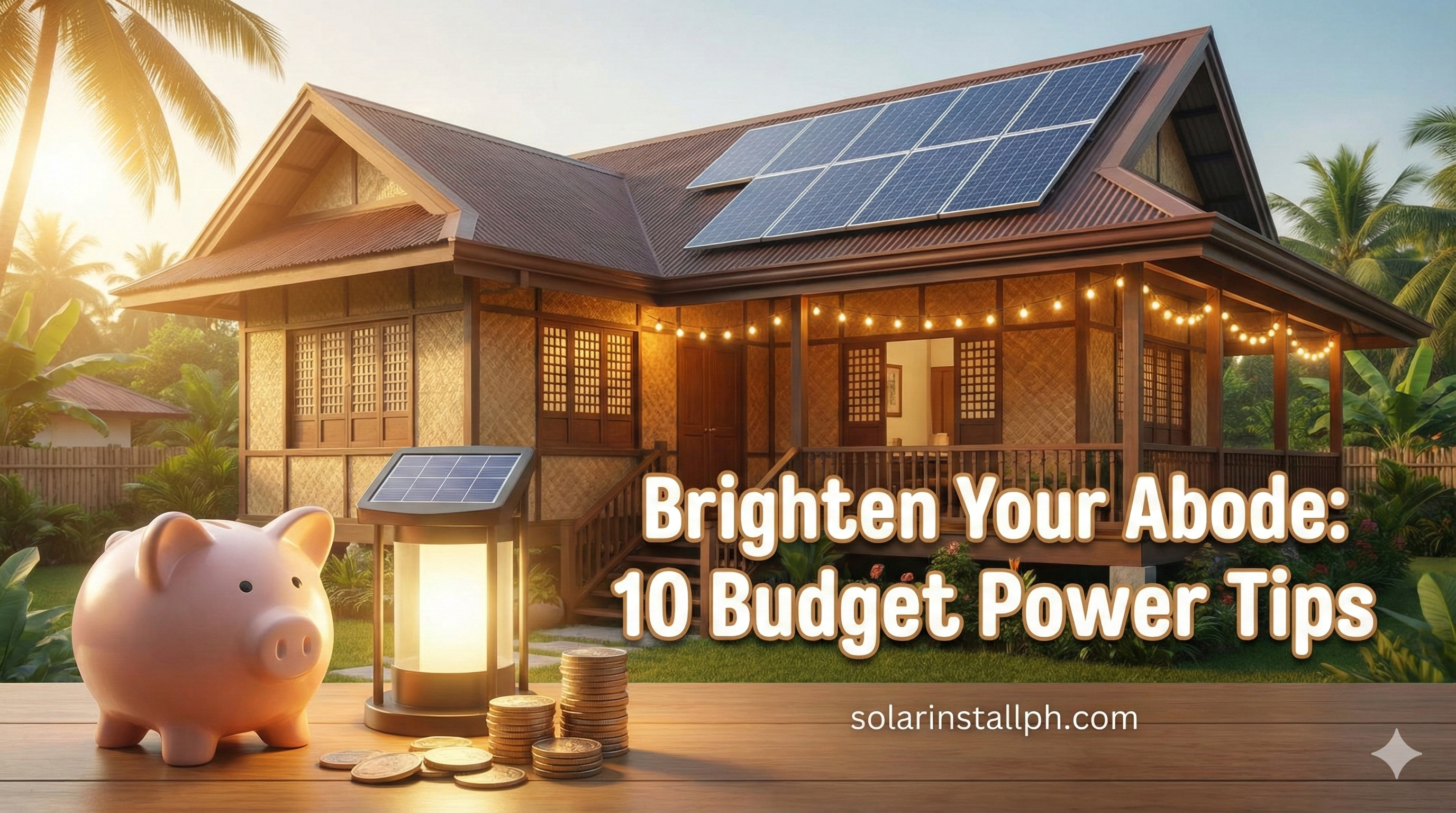
In the Philippines, "brightening" your home usually comes with a dark side: the monthly Meralco or electric cooperative bill. With residential rates averaging between ₱11 and ₱13 per kWh, Filipino households pay some of the highest electricity prices in Asia.
Every time you flip a switch, you are burning cash. But you don't need to spend millions on a full rooftop solar array to see a difference. Efficiency is the "first fuel"—it’s cheaper to save a kilowatt than to generate one.
Whether you are renting a condo in Makati or owning a house in the province, these 10 budget-friendly power tips will lower your consumption without sacrificing comfort.
1. Conduct a "Vampire" Hunt
Before you buy any new gadgets, look at what is currently plugged in. Many appliances consume "phantom power" even when turned off.
The Culprits: Microwaves with digital clocks, older TVs on standby, and gaming consoles are notorious. In some homes, these "always-on" loads can account for up to 10–23% of total energy usage.
The Fix: Use a power strip with a master switch. When you sleep, kill the switch. It costs nothing but saves pesos every night.
To find exactly which appliances are bleeding your wallet, learn how to perform a simple home energy audit.
2. The Airpot is a Silent Killer
This is the most common mistake in Filipino kitchens. The electric airpot (thermos pot) keeps water hot 24/7, re-boiling it every time the temperature drops.
The Math: An airpot can consume significantly more energy annually than a standard electric kettle because it runs continuously.
The Swap: Switch to a standard electric kettle. Boil only the water you need for your kape or cup noodles, then pour the rest into a high-quality vacuum flask (Thermos). It keeps water hot for hours without using electricity.
3. Prioritize AC Hygiene
Your air conditioner is likely 40–50% of your bill. If the filter is dirty, you are throwing money away.
The Drag: A clogged filter restricts airflow, forcing the compressor to work harder and run longer to reach the set temperature. This can increase energy consumption by 5% to 15%.
The Routine: Clean your plastic mesh filters every two weeks. It takes 5 minutes in the sink and costs zero pesos.
4. The "Electric Fan First" Policy
Don’t just turn on the AC and wait. Use a fan with your AC.
Wind Chill: A fan creates a wind chill effect, making a room feel 2°C to 3°C cooler than it actually is.
The Strategy: You can set your AC thermostat to 25°C (instead of 18°C) and run a fan. The compressor cycles off sooner, but you stay comfortable.
5. Switch to Solar Garden Lights
If you leave your porch or perimeter lights on all night for security, you are burning 8–10 hours of grid power daily.
The Budget Move: Buy standalone solar LED floodlights or garden stakes. They charge during the day and run for free at night.
Warning: The market is flooded with cheap disposable units. Ensure you buy ones with replaceable lithium batteries, or you’ll just be creating e-waste.
For a guide on what to look for (and what to avoid), read our article on solar lights safety.
6. Passive Cooling Upgrades
You can lower your bill by stopping heat from entering your house in the first place.
Roof Insulation: If you have a GI sheet roof, 15mm of PE foam insulation (the silver-backed foam) is a cheap DIY install that drastically lowers ceiling temperature.
Cross Ventilation: Open windows on opposite sides of the room at night to flush out hot air.
7. The Refrigerator Gap
Your refrigerator works by moving heat from inside the box to the outside. If the back or sides of your ref are pushed tight against the wall, that heat gets trapped.
The Strain: The compressor has to work overtime to dissipate heat in a hot space.
The Fix: Pull your ref at least 4–6 inches away from the wall. Vacuum the dust off the coils at the back once a year.
8. Rethink Water Heating
If you enjoy hot showers, you know that electric instantaneous heaters (multipoint or single point) are power hogs, often drawing 3,000 to 4,500 watts—equivalent to running three aircons at once.
The Shift: Limit showers to 5 minutes.
The Investment: If you own your home, a solar water heater (the tank type on the roof) uses zero electricity. It uses the sun’s heat directly.
Check if this upgrade makes financial sense for your family size in our guide to solar water heaters.
9. Portable Power for Gadgets
If you want to dip your toes into solar without climbing on the roof, consider a "solar generator."
The Setup: A portable power station paired with a foldable solar panel.
The Use Case: Charge your phones, laptops, and rechargeable fans during the day using free sunlight. It doubles as a brownout backup.
Explore the entry-level options in our overview of portable power stations.
10. Maximize Natural Light (Correctly)
"Brightening" your abode shouldn't mean turning on lights at noon.
The Mistake: Many Filipinos keep heavy curtains closed all day to block heat, then turn on lights.
The Fix: Use sheer white curtains. They reflect the heat radiation but let the light diffuse in, so you can keep the LED bulbs off until sunset.
Conclusion
Saving power in the Philippines isn't about suffering in the dark; it's about being smarter than the meter. By attacking the "hidden" loads like airpots and dirty AC filters, you can shave hundreds of pesos off your bill.
Once you have optimized your usage, you are in the perfect position to consider generating your own power. After all, the best way to deal with high rates is to stop paying them.
Curious about how much you could save if you took the next step? Review the current reality of residential solar costs.